
TEFILAH: TAL
1) Everyone must complete their own page.
2) The Big Moment. Azi
Schwartz is nothing if not skilled and entertaining. https://www.youtube.com/watch?v=6Nog89HrOpE
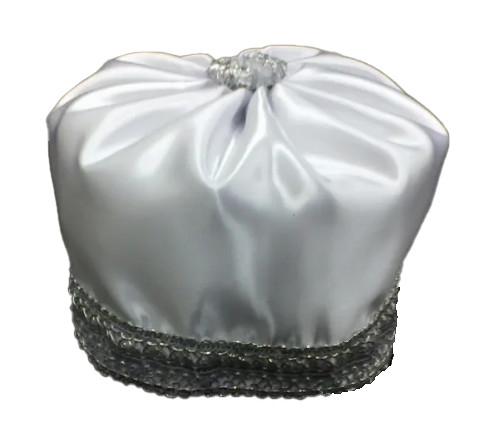
3) What is with the fancy hat? You could call it a miter, but that’s like calling tefillin a pair of phylacteries—nobody
understands it. It’s a Chazzan-Keppel, or Chazzan’s Yarmulke. https://philippi-collection.blogspot.com/2011/10/jewish-cantors-hat.html . They
are still made.
4) What is a kittel? https://www.myjewishlearning.com/article/kittel/
Why wear it for saying this
prayer?
5) Summing it all up-The Prayer
for Dew | My Jewish Learning
6) Why do we need this prayer?
Because the middle east has always been dry, but now thanks to climate
change, all of it is drying up, from Iraq to Israel. Every drop counts. So How israel is dealing with a middle east
that is getting dryer each year, and yet
has a growing population?
https://www.youtube.com/watch?v=taMWUjda3fA
TIMELINE OF THE MOVEMENT TO SAVE SOVIET JEWRY
1948 – The State of Israel is Established
- Many Soviet Jews become more interested in their Jewish identity and dream of moving to Israel but the Soviet Union does not allow free emigration.
- The soviet government shuts down Jewish schools and religious life and discourages public Jewish identity
1953 – Stalin Dies
- Soviet leader Joseph Stalin dies and life becomes slightly less oppressive
- Jews still face discrimination and restrictions on religion.
- Hebrew is banned, and many synagogues remain closed.
- Life becomes slightly less oppressive, but Jews still face discrimination and restrictions on religion and emigration.
June 1967 – The Six-Day War
- Israel wins the Six-Day War and sparks a huge rise in Jewish pride among Soviet Jews
- Thousands of Jews began openly requesting exit visas to move to Israel
1970 – The Leningrad Trial (Operation Wedding)
- A small group of Jews attempts to hijack a plane to escape the Soviet Union, but they are arrested and sentenced to prison.
- The trial brought worldwide attention to the struggles of Soviet Jews and sparked
protests worldwide
- Brings global attention to “refuseniks”
1972 – The Jackson-Vanik Amendment (U.S.)
- The U.S. passed the Jackson-Vanik Amendment, linking trade benefits with the Soviet Union to allow Jews to emigrate.
- This increases international pressure on the Soviet Union.
- More jews begin receiving exit visas in the 1970s
Mid 1970s
- Emigration rises, and thousands of Soviet Jews leave for Israel and the United States.
- Many are still being refused exit visas and are being punished and harassed by the government
- Jewish activist begin teaching Hebrew secretly and holding underground classes
Late 1970s–Early 1980s
- Emigration slows down as the Soviet government tightens restrictions.
- Many are waiting 5, 10, or more years for exit visas or are being denied.
1985 – Mikhail Gorbachev Becomes Leader
- Mikhail Gorbachev became the leader of the Soviet Union.
- He introduces reforms (glasnost and perestroika), and restrictions begin to loosen.
- Glasnost (openness)
- Perestroika (restructuring)
December 6, 1987 – Freedom Sunday (Washington, D.C.)
- 250,000 people rally in Washington, D.C., demanding freedom for Soviet Jews.
- It becomes one of the largest Jewish protest rallies in American history.
1989–1991 – Mass Emigration
- Massive wave of emigration
- Hundreds of thousands of Jews leave the Soviet Union.
- Many settle in Israel
1991 – The Soviet Union Collapses
- Restrictions on Jewish life and emigration ended.
- Over 1 million Jews moved to Israel during the 1990s, making it one of the largest migrations in Jewish history.

No comments:
Post a Comment